

Quick Answer: The Best Workout for Testosterone
Heavy, multi-joint compound lifts using the largest muscle groups produce the biggest testosterone response. The most effective movements are deadlifts, squats, bench press, bent-over rows, overhead press, chin-ups, and push-ups.
Train these as a full-body session three times a week on non-consecutive days, using heavy loads (80% of your one-rep max on the big lifts) and short-to-moderate rest. Pair the training with good sleep, sensible body fat, and adequate protein for the strongest natural testosterone effect.
For men, testosterone is the hormone that shapes much of what makes us male — it drives muscle growth, bone density, body hair, and the voice changes of puberty. It also helps regulate several important functions:
- Sex drive
- Muscle and bone mass
- Muscle strength
- Fat distribution
- Red blood cell production
Unfortunately, from around age 30 our testosterone declines by roughly 1% per year on average — and after 40, this can reach 2% a year. If you’re noticing the effects, it’s worth reading our guide to the 17 signs of low testosterone in UK men.
Aside from a prescription or potentially harmful drugs, the most reliable natural way to raise and maintain healthy testosterone is a combination of resistance training and the right diet. On the food side, prioritise options high in magnesium, zinc, and vitamin K, such as:
- Dark, leafy greens
- Shellfish
- Egg yolks
- Oats
- Beans
- Nuts
For the full food list, see our guide to the 15 best testosterone-boosting foods for UK men.
On the training side, the best exercises to increase testosterone are multi-joint movements that recruit the biggest muscle groups:
- Press-ups
- Deadlifts
- Bench press
- Rowing
- Squats
- Overhead press
These work because they build the most muscle mass, which is closely tied to testosterone release. To raise your levels, prioritise these big lifts and aim for a full-body workout three times a week.
The Testosterone-Boosting Workout: How It Works
It may not be the flashiest routine, but every exercise here is chosen to maximise your gains so your time in the gym is well spent.
Do the following workout three times a week on non-consecutive days — which conveniently leaves weekends as rest days. Each session, switch up your squat and deadlift variation to keep progressing. Use 80% of your one-rep max on deadlifts and back squats, and 70% on the bench press, shoulder press, and bent-over row.
The Workout at a Glance
| Exercise | Sets | Reps | Rest | Load |
|---|---|---|---|---|
| Deadlift | 5 | 5 | 5 min | 80% 1RM |
| Back Squat | 5 | 5 | 5 min | 80% 1RM |
| Bench Press | 4 | 8 | 2 min | 70% 1RM |
| Bent-Over Row | 4 | 8 | 2 min | 70% 1RM |
| Shoulder Press | 4 | 8 | 2 min | 70% 1RM |
| Chin-Up | 4 | 8 | 2 min | Bodyweight |
| Push-Up | 4 | 10 | 2 min | Bodyweight |
Vary your big lifts each session. For deadlifts you can rotate through:
- Suitcase deadlift
- Sumo deadlift
- Deficit deadlift
- Romanian deadlift
And for squats:
- Front squats
- Back squats
- Safety bar squats
Deadlift
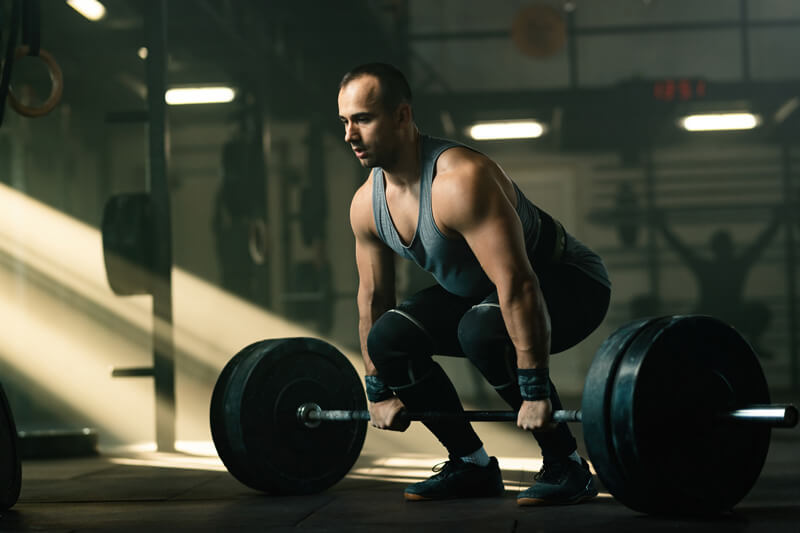
Stand up straight with your feet hip-width apart. Bend your hips back to reach down and grab the bar, hands just outside your knees.
Keep your lower back in its natural arch and drive your heels into the floor. Pull the bar up until you’re standing with your hips fully extended and the bar in front of your thighs.
Do 5 reps, for 5 sets, with 5 minutes’ rest between sets.
Back Squat
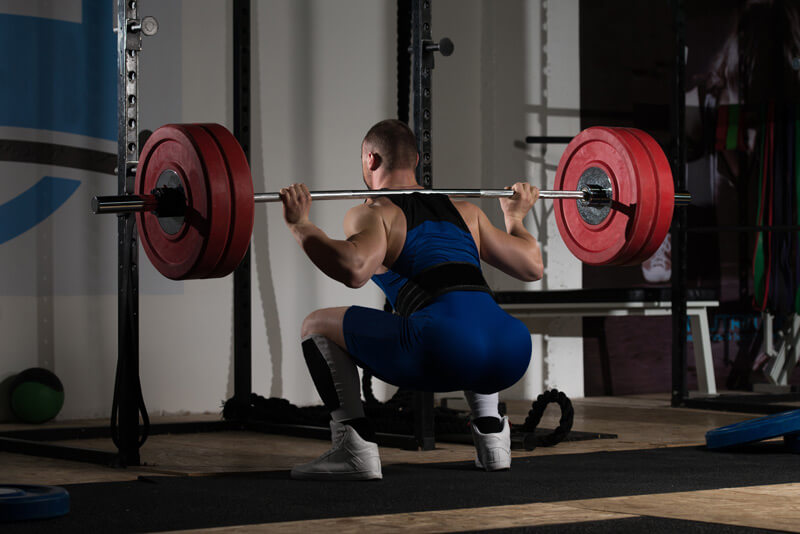
Set up a barbell on a power rack at shoulder height. Stand in front of the bar and grasp it with both hands at shoulder width, then raise your elbows so your upper arms are parallel to the floor.
Take the bar out of the rack and rest it on your upper back — keeping your elbows up keeps the bar stable. Step back, feet shoulder-width apart with toes slightly turned out. Squat as low as you can without losing the arch in your back.
As with deadlifts, do 5 reps per set for 5 sets, with 5 minutes’ rest.
Bench Press
Take hold of the bar just outside shoulder width and arch your back so there’s space between your lower back and the bench.
Pull the bar out from the rack and lower it to your sternum, tucking your elbows to your sides. Once the bar touches your body, drive your feet into the floor and use that force to push the bar back up.
Do 8 reps, for 4 sets, with 2 minutes’ rest.
Bent-Over Row
Grasp the bar at shoulder width and let it hang in front of your thighs. Bend at your hips and lower your torso until it’s almost parallel with the floor.
Bend slightly at the knees to take pressure off your hamstrings. Squeeze your shoulder blades together and pull the bar towards your stomach.
Do 8 reps, for 4 sets, with 2 minutes’ rest.
Shoulder Press
Adjust the machine seat so the handles sit at shoulder level. If you have shoulder issues and the machine allows it, grip the handles with your palms facing each other; otherwise grasp them with palms facing forward.
Keep your elbows on a normal pressing path as you press the handles overhead.
Back in the start position, repeat for 8 reps per set, 4 sets, with 2 minutes’ rest.
Chin-Up
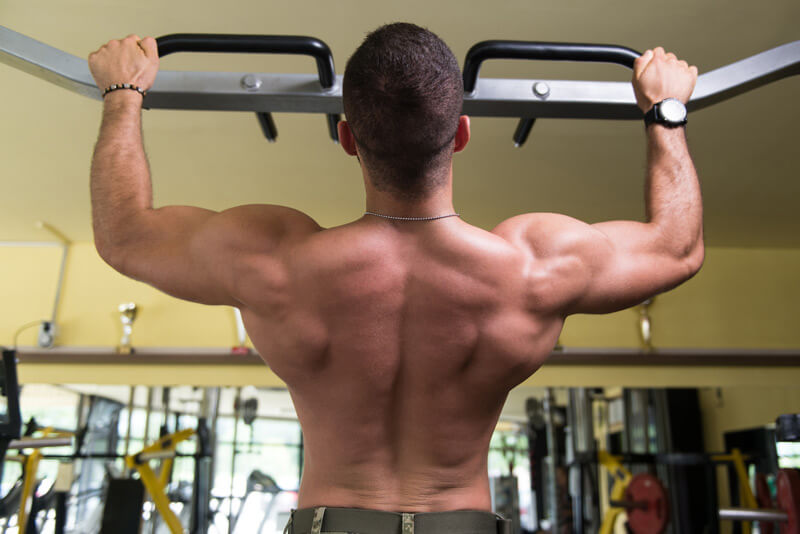
Grab a pull-up bar underhand at shoulder width.
Hang from the bar, then pull yourself up until your chin is over the top of the bar.
Do 8 reps, for 4 sets, with 2 minutes’ rest.
Push-Up
Place your hands on the floor shoulder-width apart. Keep your core engaged, your body in a straight line, and your shoulder blades squeezed together.
Lower your body until your chest is about an inch from the floor, then push through your arms back to the start.
Do 10 reps, for 4 sets, with 2 minutes’ rest.
Why Heavy Compound Lifts Raise Testosterone
It’s worth understanding why this style of training works, so you stick with it:
- More muscle recruited = bigger hormonal response. Compound lifts like squats and deadlifts recruit huge amounts of muscle at once, which triggers a greater acute testosterone release than isolation exercises.
- Heavy loads drive adaptation. Training at 70-80% of your one-rep max is the sweet spot for strength and the associated hormonal benefits.
- Building muscle raises your baseline. Over time, more lean muscle mass supports a healthier long-term testosterone level — not just the short spike after a session.
- Less fat, less aromatase. Resistance training helps reduce body fat, and lower body fat means less of the aromatase enzyme converting your testosterone into oestrogen.
One caveat: more is not always better. Overtraining and chronic under-recovery raise cortisol, which suppresses testosterone. That’s exactly why this plan is three sessions a week with full rest days — not daily grinding.
The Bottom Line
This is a genuinely effective workout for raising testosterone naturally — with the bonus of weekends off and built-in variety so you keep progressing. None of the exercises are overly complex.
Work through it three times a week, eat to support your training, sleep well, and stay consistent. Combined, these habits build a strong natural platform for healthy testosterone.
Support Your Training with TestoPrime

Sticking to your routine is hard when your energy and motivation are low — which is exactly where declining testosterone hits hardest.
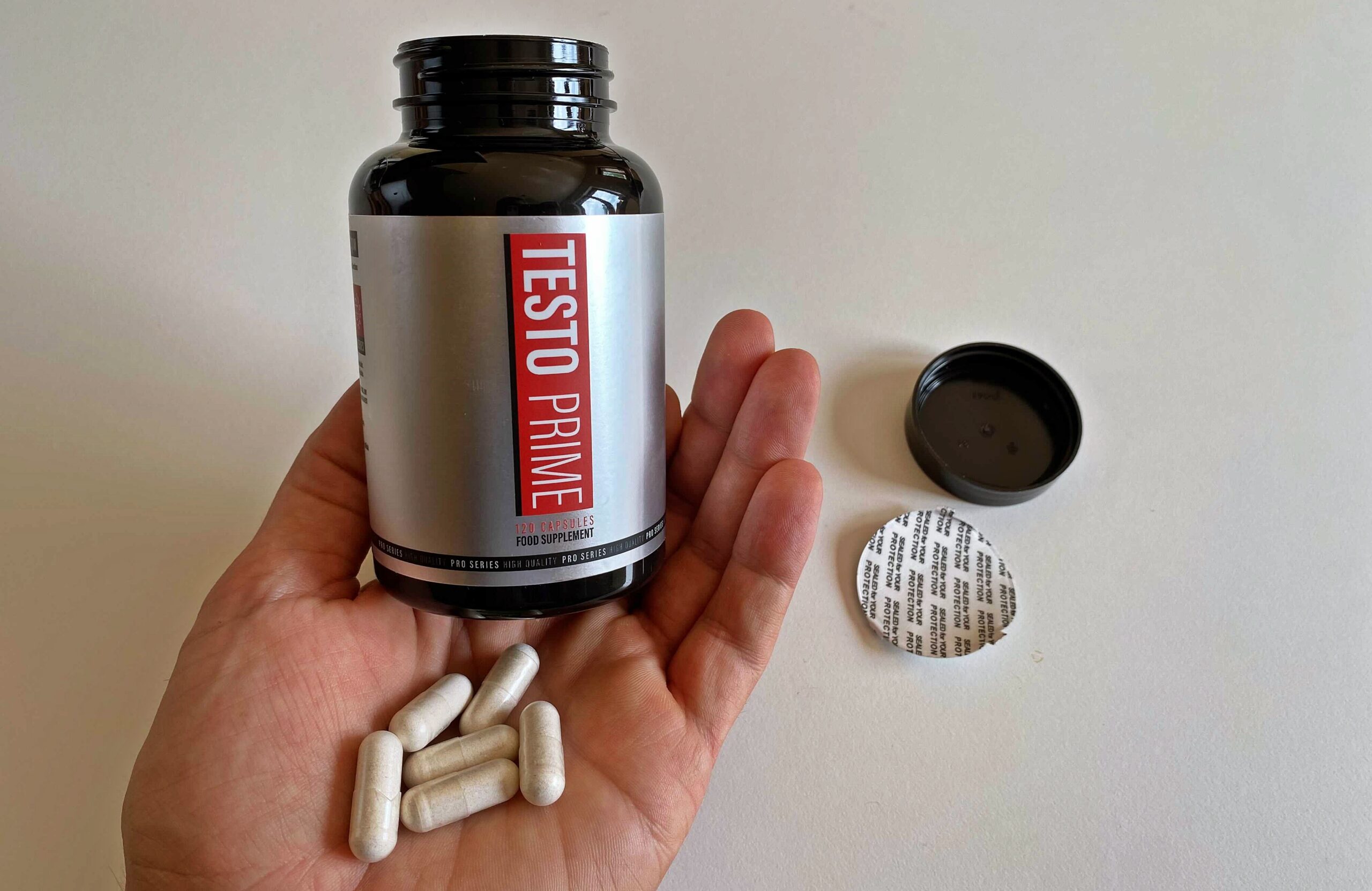
This is where a clinically-dosed natural testosterone booster like TestoPrime can help. Its 100% natural formula is designed to support male wellbeing across the board. Taking four capsules a day, TestoPrime can help:
- Support fat loss
- Improve training performance
- Support muscle growth
- Boost energy levels
It works best alongside the training and nutrition above — the supplement amplifies good habits rather than replacing them. Learn more in our guide to the best natural testosterone boosters in the UK.
Frequently Asked Questions
How often should I do this workout?
Three times a week on non-consecutive days (for example Monday, Wednesday, Friday). The rest days are essential — recovery is when your body adapts and testosterone benefits accumulate. Training the same heavy lifts daily would raise cortisol and work against you.
Do compound lifts really increase testosterone?
Yes. Heavy multi-joint movements that recruit large muscle groups (squats, deadlifts, presses, rows) produce a greater acute testosterone response than isolation exercises, and building muscle over time supports a healthier baseline.
How long until I see results?
Strength gains often show within 4-6 weeks. Body composition and the longer-term hormonal benefits build over 2-3 months of consistent training combined with good sleep and nutrition.
Can I do this workout at home?
Partly. Push-ups and chin-ups need minimal equipment, but the barbell lifts (deadlift, squat, bench, row, press) need a barbell and ideally a rack. A basic home gym setup or a commercial gym membership makes the full programme possible.
Should I take a supplement alongside training?
Training and diet are the foundation. For mild-to-moderate low testosterone, a clinically-dosed natural booster like TestoPrime can complement the work — but it isn’t a substitute for it. For severe clinical low testosterone, speak to your GP.
What should I eat to support this workout?
Prioritise protein (around 1.6-2g per kg of bodyweight), plenty of testosterone-supportive whole foods (see our testosterone foods guide), and enough overall calories to fuel heavy training and recovery.
Related Reading
- 15 Best Testosterone-Boosting Foods for UK Men
- 17 Signs Your Testosterone Is Low — UK Men’s Guide
- Best Natural Testosterone Booster UK 2026 — Buyer’s Guide
Ryan Rigney
Ryan Rigney is a health and fitness writer who turned his personal struggle with low testosterone into a mission to help others. After spending years battling fatigue and weight gain, Ryan dove headfirst into researching hormonal health, eventually transforming both his body and his career. His no-nonsense approach cuts through medical jargon to deliver practical advice for men looking to optimize their hormonal health naturally.
Similar Posts
TestoPrime Gold Reviews: A Closer Look at the Ingredients and the Science
For a lot of men, the mid-forties bring the same quiet shift. Gym sessions take longer to recover…
Read More
Why You Won’t Find TestoPrime in Boots, Holland & Barrett or Amazon UK
Quick Answer TestoPrime is not sold in Boots, Holland & Barrett, Amazon UK, Tesco, Sainsbury's, Asda, Superdrug, Lloyds…
Read More
Ryan Rigney: How I got my energy back
When you lack motivation, you barely wanna get out of bed – let alone hit the gym or…
Read More
The Testosterone Boosting Exercises You Need in Your Life
Quick Answer: Does HGH Work for Low Testosterone? No — not directly. Human growth hormone (HGH) has very…
Read More
Top Testosterone Boosters UK: Enhance Performance
Quick Verdict: Best Testosterone Boosters UK 2026 🏆 Overall winner: TestoPrime — the most clinically-dosed, transparent, and UK-backed…
Read More
Best Natural Testosterone Booster UK 2026: An Honest Buyer’s Guide
Quick Verdict: Best Natural Testosterone Booster UK 2026 🏆 Winner: TestoPrime — the most clinically-dosed, transparent, and UK-backed…
Read More